

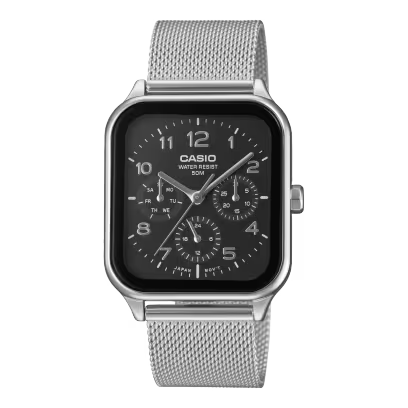


"Water resistant" is one of the most misread labels on any watch. A rating of 50m does not mean you can swim to 50 metres underwater, and getting this wrong is one of the fastest ways to damage a perfectly good watch.
Here's what the numbers on your Casio actually mean, and what's genuinely safe to do while wearing it.
The numbers are a lab test, not a diving limit
Water resistance ratings come from a controlled pressure test, not a real-world depth guarantee. International watchmaking standards, specifically ISO 22810, which governs everyday water-resistant watches, set the criteria manufacturers must meet to apply a given rating. Static lab pressure differs greatly from the dynamic pressure your wrist creates while swimming, showering, or diving off a board, which is why practical guidance is always more conservative than the number on the case back.
What each common Casio rating actually covers
30m / 3 ATM Fine for rain, splashes, and washing your hands. Not safe for swimming, showering, or any submersion; moisture can still get in under dynamic pressure. Many pieces in our Vintage collection sit at this level.
50m / 5 ATM Covers light exposure to water, a quick splash, being caught in rain, incidental contact, but is still not recommended for swimming.
100m / 10 ATM Suitable for swimming and showering, though not for high-impact water sports like diving or waterskiing. Many Edifice models sit at this rating.
200m / 20 ATM Suitable for recreational scuba diving and most water sports. This is the standard rating across most of the G-Shock range, which is one reason G-Shock has become the go-to choice for anyone who's genuinely active in and around water.
Why the rating can quietly change over time
A water resistance rating reflects the watch's condition when it left the factory or was last serviced, not a permanent guarantee.
The rubber gaskets around the case back, crown, and buttons age and can lose their seal over years of wear, heat exposure, and repeated opening (including battery changes done incorrectly).
This is exactly why we recommend professional battery replacement for water-resistant pieces rather than opening the case yourself; a poorly reseated gasket can quietly turn a 200m-rated G-Shock into a watch that lets in moisture at a fraction of that depth.
A simple rule of thumb
If you're unsure what your watch can handle, treat the printed rating as the laboratory maximum, not the safe everyday limit and when in doubt, take it off before swimming rather than testing it. If you want a watch specifically for swimming, diving, or heavy water exposure, lead with a 200m-rated G-Shock rather than assuming a lower-rated piece will do.
Not sure what your current watch is rated for? Check the case back, your original packaging, or bring it into either of our stores in Lagos or Abuja and our team will confirm.
FAQs
Can I shower with a 50m-rated Casio watch?
It's not recommended. 50m covers incidental splashes, not sustained water exposure like showering; hot water and soap can also affect the seals over time.
Is 100m water resistance enough for swimming?
Yes, 100m is generally considered suitable for swimming and showering, though not for diving or high-impact water sports.
Does water resistance decrease as the watch ages?
It can, mainly due to gasket wear from age, heat, and repeated case openings, which is why periodic professional checks matter for watches you rely on around water.
Which Casio watches are rated for swimming?
Most G-Shock models are rated to 200m, making them the safest default choice if swimming or water sports are a regular part of your routine.